Forget menopause or “40 is the new 30”. It’s just plain old re-discovery of the joys of sex for women in their 40s and late 30s. Note the word “women”. Girls may just want to have fun but ladies in their 40s are bringing in the “L” in liberation when it comes to exploring their sexuality.
“Sex is an important part of any relationship but I had kids in my mid-20s so I've hardly had time to think of myself in the last in the last 10 years. Now they've grown up and I've had the chance to rediscover myself,” says Meenakshi Grewal, a business executive with an advertising firm in the city.
There seems to be a “growing” generation of females reaching their late 40s and revelling in a newfound youth. And it sure ain’t the fountain. Overwhelmingly comfortable in themselves and using their financial independence to the fullest, unlike when they were younger and more insecure, this independent breed of women seem to have no qualms about taking control of her love life. And of course sex.
“When you’re at that age, women have passed the stage of awkwardness and shyness with their femininity. They become more uninhibited and comfortable with their sexuality at that age. It’s maturity. Since she’s probably been married and had kids, she’s bound to realise that she need to take an active part and take the lead when it comes to her own orgasm,” says sexologist Rajan Bhonsle.
From socialising with friends in bars and clubs to abandoning the image of doting grandparents and living only to take care of their kids and grandchildren, these women are bringing it on. Take Nalini Ramachandra for one. A 42-year old mother of two college-going children, she says she’d discovered a whole new take on life. With an ability to look on the brighter side and taking control of her life especially of that with her husband, she says, "It's surprising but I don't think I've ever felt better. My husband would say I've never looked better. We seemed to have got back that spark that was missing for the longest time. This is the time to focus on myself rather than my family."
Don’t believe that, take the survey, commissioned by Debenhams, which said that this is the age when women feel, or expect to feel themselves the happiest, most attractive and confident. The survey comes after a recent research, which showed that women hit their peak when they turn 39.
“They would make the most of now since the menopausal stage would hit them soon. More than biological reactions, its mostly psychological. At 37, 38 or 40, their hormones might not level with their body’s. Their estrogen levels are dropping so why not make the most of it?”says Rajan.
So is it vanity insanity for older women then in their reach for liberation? While popularity of cosmetic surgery is growing exponentially, it would be difficult to bracket each one of them to prefer going under the knife. “I am independent, comfortable in my own skin and above all know what I want and most of all how to get it now. I am more than happy to behave independently, free of any influence. I am completely happy with their natural appearance,” says Madhuri Singhania.While this would challenge the preconceived attitudes of society towards women in their 40s and 50s as being safe and set in their ways, for now, go get your freak on ladies.
Monday, September 29, 2008


Hear, Speak, See no evil...


Screening of “international” cinema — which would otherwise have never seen the light of day in the country — is moulding a cocoon that seem ready to take beautiful wings thanks to an array of player in the cinematic circles to propel and widen viewer perspectives on all things cinema. And riding on hat wave comes Palme d’Or nominee at the Cannes Film Festival, Three Monkeys directed by Nuri Bilge Ceylan from Turkey. The family drama that hit cinemas across Delhi, Mumbai and Bangalore on September 19, has been running to a great tilt since then. “I think we do it in life, also, many times — every one of us. We play “three monkeys”: see no evil, hear no evil, speak no evil.” The director says about his film.
Three Monkeys was officially selected for competition at the 2008 Festival de Cannes, and went on to win the Best Director Award.
Noted for his short films and having won multiple awards, his works include his first short film Koza which was screened at the Festival de Cannes in 1995. He received several awards with his debut feature Kasaba in 1997 and his third feature Uzak in 2002 was similarly feted with awards, including the Grand Jury Prize and the Best Actor Prize at Cannes.
“It has always astonished me to see, in the human soul, the co-existence of the power to rule and the potential to forgive — the interest in the most holy and that of the lowest banality, and love and hate. For this reason, dealing with the qualities of our inner world which cannot be formulated rationally and trying to comprehend it, has always been the foremost reason for me in making films,” Ceylan says.
His recent venture Three Monkeys brings out the adversity faced by a family that suffers from a major communication breakdown during their struggle to get through the hardships. In order to avoid responsibilities that would otherwise be impossible to endure, the family chooses to ignore the truth, not to see, hear or talk about it, but does playing “Three Monkeys” invalidate the truth? “This film aims to present that kind of emotional and psychological situation together with a plot loaded with the violence of complicated events evolving between four main characters. We have tried to dramatise the abstract thoughts, beliefs and conceptual conflicts which deeply engage our minds by personifying them in these characters,” Ceylan responds. Three Monkeys PVR is screening at PVR cinemas across Delhi, Mumbai and Bangalore.
Identity Rebirth


From the Portugese to the British. From seven islands to one thriving metropolis. Bombay to Mumbai. What so intrinsically pulls a city that deems to never stop functioning can inherently be found in the communities that weave the fabric of this teeming soul of human enterprise. A true microcosm to the diversity that India as a country entails.
Diverse ethnic backgrounds and over a dozen languages add to the interminable texture of phantasmagorial Mumbai.
If the Portuguese saw the potential of the city’s natural harbour, the fisherfolk had long discovered the shiny coastline. Celebrated author Salman Rushdie in his acclaimed book Midnight’s Children writes, “The fishermen were here first ... when Bombay was a dumbbell-shaped island tapering, at the centre, to a narrow shining strand beyond which could be seen the finest and largest natural harbour in Asia”. The Koli’s. The original inhabitants of these islands who gave the city its name. “They were the original inhabitants of Mumbai of course — earliest settlers in much the same way as the Red Indians of North America or the Maoris of New Zealand. In an anthropological sense, they made a significant contribution to Mumbai. Many were converted to East Indian Christians, but those who were educated went on to hold clerical posts in major civic bodies, including the BMC and the Port Trust,” says historian Sharada Dwivedi.
With the city’s itch to find its niche in the new world order, they now live a marginalised existence at the fringes of Mumbai. “Today, their situation is not encouraging. The government has done little to promote their trade. They face tremendous competition as exports of marine products grow. I think they themselves made the mistake of taking their incomes for granted,” says advocate Rajan Jayakar.
If the easily distinguishable and excitable Koli’s now find their settlements protected by law, can Sassoon dock be far behind? The Jewish communities, the
Baghdadi Jews and the
Bene-Israel have given the city many of its important landmarks. Mostly traders and financiers, the Baghdadi jews contribution to the industrial growth of Bombay is well documented.
David Sassoon, a member of the community is a well-known philanthropist. Post independence there has a continuous migration of the Baghdadi Jews to Israel leaving behind few yet a trail of majestic glory.
On the other hand, claiming to be descended from Jews who escaped persecution in Galilee in the 2nd century BC, the identity of the Bene-Israelis was eventually transformed when they came into contact with the Cochin Jews. Once they emigrated to Bombay, contact with the
Baghdadi Jews and the worldwide Zionist movement transformed their cultural identity. “The Bene-Israelis came to Mumbai much earlier. They immediately setup many textile mills, creating huge employment opportunities for the local people. But more important was the money they pumped into technical institutes, for both mechanics and school children. While the community itself doesn’t exist today, their legacy lives on through the many educational and research centres they set up,” says Dwivedi. This particular community opened our minds to the poet
Nissim Ezekiel.
While the Jews might have looked outward for the Promised Land, the Muslim community seemed to have eased themselves into the cacophony of the city. The
Bohras and the Khojas being the best known. “What these communities had in their favour was the fact that when they first came into Mumbai from Gujarat, they had protection from conversion. The British at the time gave them complete freedom to practise whatever faith they chose to. They are the earliest migrants from Gujarat to Mumbai. As traders, they set about building a vast network of textile mills. Their contribution to the history of Mumbai is manifested in the opportunities they created from a large number of people.” Says Dwivedi.
“The northern end of the fort, near the present day
general post office is still called Bora Bazaar, after the large numbers of Bohras who set up shops there. With increasing wealth, some Bohras moved out of business and into other professions, just as some
Parsis did at the same time,” says Jayakar.
And there has never been a more integrated community than the Parsis that has captured the spirit of this definition defying city. Zoroastrian Persians migrated to India after the fall of the Sassanian Empire, and gave rise to the modern Indian Parsi community. The first record of a Parsi, Dorabji Nanabhai, settling in Bombay dates from 1640. And ever since the Parsis are intimately connected with the history of Bombay. “The
cotton boom was largely fuelled by Parsi entrepreneurs. The oldest newspaper in Bombay, "Bombay Samachar", was run by Parsis.
Congress stalwarts like
Dadabhai Naoroji,
Pherozeshah Mehta and Dinshaw Wacha were Parsis. One of India's biggest industrial houses was founded by a Parsi, Jamsetji Tata. Even the physical shape of Bombay was determined by donations to build causeways, roads and buildings by members of the Jeejeebhoy and Readymoney families,” says Mr Gorakshkar, retired head of the Prince of Wales Museum.
“Like the Parsis, the Pathare Prabhus have been stagnant. Today the community will not be more than 10,000 although it is now growing. Because of other more adventurous communities like the Parsis, the Pathare Prabhus are is not as well known. Moreover it was a community of professionals like architects, lawyers and doctors rather than businessmen. Pathare Prabhus are a community that came to Mumbai around 1294 from a place called Pathan in Gujurat,” says Jayakar.
“A lot has changed in the community in the last 60 years. The culture has become diluted so much so that it has to be taught now,” says Mr Gorakshkar.
With the heady mélange of ethnic, linguistic and religious diversity, to the vibrant influence of the new and the old, the affluence and abject poverty — this is the Mumbai we love. This is the Mumbai we’ve lived. It’s everyone’s representation of the city. And the city’s representation of its people. Mumbai mere jaan.
Interview with Anil Chawla
Q. As resident spinner at Mongo Bongo, how different is the clubbingscene in Bombay to London or anywhere else in the world?I've only spent a short time in Bombay, and have never DJ'd there, socouldn't really compare the scene in Bombay to anywhere in the world. You'llhave to ask me that question again in a week's time!
Q. How would you define the kind of music you do? Rather how would youdescribe what you do?It's all about house for me - from the deep groovy stuff right through tothose twisted 5am moments. If I'm opening, I love the deep house/discosound. Later into the night and on a more twisted flavour; groovy tech houseand techno is what I'm about... With a splash of acid thrown in for goodmeasure.
Q. How open do you think the Indian audiences are to electronica? Orperhaps, how big is the electronica scene here as compared to Europe?I think it's certainly a developing scene. However, because it's relativelynew to a lot of people, they are very enthusiastic about the music - whichis very much positive thing. My experience in Goa (for the Sunburn festival)was very encouraging, and it was great to meet so many people who were sopassionate about house music. Also, you have groups like Submerge who areopening up the scene to so many new people and really pushing it forward.It's a very exciting development for global music.
Q. Do you think India has the potential to be a leader in the clubbingscene as much as Europe is known for?I certainly don't see why not. It will take time and the right people behindit, but I can certainly see it going that way, with more and more peoplegetting into clubbing. Also, there are some great electronic acts coming outof India like Jalebee Cartel and Midival Punditz, which will help push the
movement forward.
Q. How different is your music from your contemporaries? How do youdifferentiate yourself?That's a really good question, but ultimately it's very difficult to answer!I guess the way I try to differentiate myself is by only playing music thatI love, rather than being caught up in following trends.
Q. Can you explain what Global underground UK house music connotates?Global Underground is the record label that I put out a lot of music with,and whom I am working on my album for (in collaboration with Dale Anderson).It's a great honour to be associated with them, as they were the firstpeople to really grasp the concept of DJ mixes, putting out legendaryselections from Sasha, Digweed, Danny Howells, Sander Kleinenberg, SteveLawler, and loads more.
Q. How far with you go in experimenting with your music? Do you thinksomewhere genres get diluted in while mixing music? You think thatwould take away from the essence of its roots?I think it's healthy to experiment to a certain extent... I'm not up therewith Laurent Garnier, but I love to have a play with different sounds forsure. It keeps it interesting. But there are certainly other times when youneed to just keep it as straight house/techno and hold a consistent groove.It's all about reading the crowds.
Q. Where do you see yourself headed with your music?Right now, getting the album finished is priority number 1... Myself andDale have been working on our debut artist album for the last year, whichwill be coming out on GU early next year. We're both very excited to see itout in the shops. I've also been doing a fair bit of touring over the summer(through South America and Europe), and will be continuing with that untilthe end of the year, and beyond. Also, on the production front, I've justfinished a couple of remixes for Cevin Fisher and Redanka, both of which
will be getting their debut on the India tour.
Q. How long has it been since you got into what your'e doing? How longbefore you take a different route, if ever?I've been playing with record decks for about 8/9 years, but I've onlyreally been pursuing it properly for the last 4 years or so. As for the longterm... Well, I'm just taking each day as it comes, and I'm really happywith the way things are going right now. I have no plans to take a massivelydifferent route at the moment, but I certainly shalln't rule it out for thefuture.
Q. How would you define the kind of music you do? Rather how would youdescribe what you do?It's all about house for me - from the deep groovy stuff right through tothose twisted 5am moments. If I'm opening, I love the deep house/discosound. Later into the night and on a more twisted flavour; groovy tech houseand techno is what I'm about... With a splash of acid thrown in for goodmeasure.
Q. How open do you think the Indian audiences are to electronica? Orperhaps, how big is the electronica scene here as compared to Europe?I think it's certainly a developing scene. However, because it's relativelynew to a lot of people, they are very enthusiastic about the music - whichis very much positive thing. My experience in Goa (for the Sunburn festival)was very encouraging, and it was great to meet so many people who were sopassionate about house music. Also, you have groups like Submerge who areopening up the scene to so many new people and really pushing it forward.It's a very exciting development for global music.
Q. Do you think India has the potential to be a leader in the clubbingscene as much as Europe is known for?I certainly don't see why not. It will take time and the right people behindit, but I can certainly see it going that way, with more and more peoplegetting into clubbing. Also, there are some great electronic acts coming outof India like Jalebee Cartel and Midival Punditz, which will help push the
movement forward.
Q. How different is your music from your contemporaries? How do youdifferentiate yourself?That's a really good question, but ultimately it's very difficult to answer!I guess the way I try to differentiate myself is by only playing music thatI love, rather than being caught up in following trends.
Q. Can you explain what Global underground UK house music connotates?Global Underground is the record label that I put out a lot of music with,and whom I am working on my album for (in collaboration with Dale Anderson).It's a great honour to be associated with them, as they were the firstpeople to really grasp the concept of DJ mixes, putting out legendaryselections from Sasha, Digweed, Danny Howells, Sander Kleinenberg, SteveLawler, and loads more.
Q. How far with you go in experimenting with your music? Do you thinksomewhere genres get diluted in while mixing music? You think thatwould take away from the essence of its roots?I think it's healthy to experiment to a certain extent... I'm not up therewith Laurent Garnier, but I love to have a play with different sounds forsure. It keeps it interesting. But there are certainly other times when youneed to just keep it as straight house/techno and hold a consistent groove.It's all about reading the crowds.
Q. Where do you see yourself headed with your music?Right now, getting the album finished is priority number 1... Myself andDale have been working on our debut artist album for the last year, whichwill be coming out on GU early next year. We're both very excited to see itout in the shops. I've also been doing a fair bit of touring over the summer(through South America and Europe), and will be continuing with that untilthe end of the year, and beyond. Also, on the production front, I've justfinished a couple of remixes for Cevin Fisher and Redanka, both of which
will be getting their debut on the India tour.
Q. How long has it been since you got into what your'e doing? How longbefore you take a different route, if ever?I've been playing with record decks for about 8/9 years, but I've onlyreally been pursuing it properly for the last 4 years or so. As for the longterm... Well, I'm just taking each day as it comes, and I'm really happywith the way things are going right now. I have no plans to take a massivelydifferent route at the moment, but I certainly shalln't rule it out for thefuture.
Obnoxiously electronic


With underground movements rearing undercurrents with different connotations across the country, the city is putting up with electronica like never before. And marking a foray with an undertone that defies judgments, Anil Chawla brings his “Global underground” UK house music deep within the confines of Henry Thams.
With a clashing term like that to throw your music into, Anil explains, “Global Underground is the record label that I put out a lot of music with, and whom I am working on my album for. It's a great honour to be associated with them, as they were the first people to really grasp the concept of DJ mixes, putting out legendary selections from Sasha, Digweed, Danny Howells, Sander Kleinenberg, Steve Lawler, and loads more.”
As resident spinner at Mongo Bongo in London, his sight on the clubbing scene in Mumbai still holds to be “buzzed” as he puts it,“ I've only spent a short time in Bombay, and have never DJ'd there, so I couldn't really compare the scene in Bombay to anywhere in the world. You'll have to ask me that question again in a week’s time!”
Having exploded on the scene as a DJ to watch back in 2004, Anil Chawla has since soared through the ranks of the music world to establish himself as one of the UK’s most “hotly-tipped” electronic DJ/Producers of recent years. Having been labeled as “a rare breed on the circuit and a true model professional” he brings it all down to his music. “It’s all about house for me — from the deep groovy stuff right through to those twisted 5 am moments. If I’m opening, I love the deep house/disco sound. Later into the night and on a more twisted flavour; groovy tech house and techno is what I'm about. With a splash of acid thrown in for good measure,” noting down his tinge of excitement.
With experimentation at most times being the name of the game with electronica, Anil says, “I think it’s healthy to experiment to a certain extent. I'm not up there with Laurent Garnier, but I love to have a play with different sounds for sure. It keeps it interesting. But there are certainly other times when you need to just keep it as straight house/techno and hold a consistent groove. It’s all about reading the crowds.”
Anil’s just finished a couple of remixes for Cevin Fisher and Redanka, both of which will be getting their debut on the India tour. “I think electronica is certainly a developing scene. However, because it's relatively new to a lot of people, they are very enthusiastic about the music – which is very positive thing. My experience in Goa (for the Sunburn festival) was very encouraging, and it was great to meet so many people who were so passionate about house music. Also, you have groups like Submerge who are opening up the scene to so many new people and really pushing it forward. It’s a very exciting development for global music,” he says.
Here’s to getting our grooves back.
With a clashing term like that to throw your music into, Anil explains, “Global Underground is the record label that I put out a lot of music with, and whom I am working on my album for. It's a great honour to be associated with them, as they were the first people to really grasp the concept of DJ mixes, putting out legendary selections from Sasha, Digweed, Danny Howells, Sander Kleinenberg, Steve Lawler, and loads more.”
As resident spinner at Mongo Bongo in London, his sight on the clubbing scene in Mumbai still holds to be “buzzed” as he puts it,“ I've only spent a short time in Bombay, and have never DJ'd there, so I couldn't really compare the scene in Bombay to anywhere in the world. You'll have to ask me that question again in a week’s time!”
Having exploded on the scene as a DJ to watch back in 2004, Anil Chawla has since soared through the ranks of the music world to establish himself as one of the UK’s most “hotly-tipped” electronic DJ/Producers of recent years. Having been labeled as “a rare breed on the circuit and a true model professional” he brings it all down to his music. “It’s all about house for me — from the deep groovy stuff right through to those twisted 5 am moments. If I’m opening, I love the deep house/disco sound. Later into the night and on a more twisted flavour; groovy tech house and techno is what I'm about. With a splash of acid thrown in for good measure,” noting down his tinge of excitement.
With experimentation at most times being the name of the game with electronica, Anil says, “I think it’s healthy to experiment to a certain extent. I'm not up there with Laurent Garnier, but I love to have a play with different sounds for sure. It keeps it interesting. But there are certainly other times when you need to just keep it as straight house/techno and hold a consistent groove. It’s all about reading the crowds.”
Anil’s just finished a couple of remixes for Cevin Fisher and Redanka, both of which will be getting their debut on the India tour. “I think electronica is certainly a developing scene. However, because it's relatively new to a lot of people, they are very enthusiastic about the music – which is very positive thing. My experience in Goa (for the Sunburn festival) was very encouraging, and it was great to meet so many people who were so passionate about house music. Also, you have groups like Submerge who are opening up the scene to so many new people and really pushing it forward. It’s a very exciting development for global music,” he says.
Here’s to getting our grooves back.
Saturday, September 20, 2008
Titanic composer’s Malayalam score — Award-winning composer John Altman speaks of his latest venture in Mumbai


A musician’s credibility might not necessarily be judged solely on his or her achievements. Or performances with legendary artistes. But in John Altman’s case, his name might as well be set in stone here and now. The man behind the soundtrack for the multiple Oscar winning film Titanic, Altman is in Mumbai for the premiere of Malayalam film Aakasha Gopuram. “It’s a very interesting concept. The filmmakers heard my music from other films. What they wanted me to do was write something that was different, with no hints of regional traces. So all I did was infuse my sensibilities and create the track for the movie. It’s groundbreaking in terms of the marriage of cultures, and it’s a complete, radical departure from your mainstream Indian music,” says Altman.
Beyond achievements and laurels, what’s in a name we would ask? To be in awe of musical geniuses, one would say everything. During his career Altman has worked with some of the greatest names in the music industry including Bob Marley, Jimi Hendrix, Eric Clapton, Van Morrison, Goldie, Chaka Khan, Fleetwood Mac, Bob Geldof, the list goes on. “You don’t really know if these artistes are going to turn into such legendary figures. You just play with them for the talent that they bring into the music. I know it’s not everyday that you get Bob Marley playing for your 21st birthday. I guess I’m just privileged that I come from a well-known family of musicians,” he says nonchalantly.
And of course, the million-dollar question for all international artistes visiting the country: Is Bollywood calling? “I would love to do a full-fledged musical. It would be a treat to get a whole lot of people coming together and performing,” he says.
“India has such a vibrant music scene. Thirteen years ago I worked with an Indian jazz fusion group from Kolkata. It would be great to revisit that kind of a musical journey. Indian music was such an influence in the 60s. I’ve listened to a lot of Ravi Shankar and he’s a musical genius. Virtuoso Craig Lewis, who is a friend in the US, plays the sitar and he blends classical music with African drums. The sounds from a sitar is an ecstatic experience in itself,” Altman says about Indian music.
Film music has always featured heavily in John’s career. He has won the 2000 Emmy and Ascap awards for his outstanding score for RKO 281 starring John Malkovich. In 1992 Altman also won the Anthony Asquith Award for Best Score and a Bafta nomination for the British film Hear my Song. In 1991, he became the first Western composer to score a
Russian movie. Further credits include the hit movie Little Voice (1998), Goldeneye (1995), Titanic (1997), Beautiful Thing (1996), Bhaji on the Beach (1993), and The Lost Empire (2001). “With Aakasha Gopuram, the filmmakers wanted me to just watch the film and write what I felt. I tried to narrow the passion and commitment of the film. The music enlarges the tragic dimension of a man constantly yearning and never finding. The film is amazing in terms of how its full effect treats the music within the development of the narrative, and grows with the strength of the characters,” he says.
While he’s been experimenting with his music and constantly changing compositions, he believes that there is a time and place for all kinds of music, including fusion. “It’s not about purists. Twenty years ago a lot of people didn’t know traditional
Indian, Chinese or even Turkish folk music. Fusion makes way for an introduction and traditional, classical and modern should really stand side by side. The healthiest thing for musicians is change. Of course I’d be upset if the originals are replaced. With airwaves and the onslaught of technology, there is a danger of music being just one. I stand for the cause and respect for genres,” he says.
Altman’s 18-piece Big Band takes to the stage in the L.A. Jazz Festival next and he says he is currently in talks with people for a concert in India. “Soon,” he says, “soon.” In the meantime, let the saxophonist get his silver screen quotations.
Beyond achievements and laurels, what’s in a name we would ask? To be in awe of musical geniuses, one would say everything. During his career Altman has worked with some of the greatest names in the music industry including Bob Marley, Jimi Hendrix, Eric Clapton, Van Morrison, Goldie, Chaka Khan, Fleetwood Mac, Bob Geldof, the list goes on. “You don’t really know if these artistes are going to turn into such legendary figures. You just play with them for the talent that they bring into the music. I know it’s not everyday that you get Bob Marley playing for your 21st birthday. I guess I’m just privileged that I come from a well-known family of musicians,” he says nonchalantly.
And of course, the million-dollar question for all international artistes visiting the country: Is Bollywood calling? “I would love to do a full-fledged musical. It would be a treat to get a whole lot of people coming together and performing,” he says.
“India has such a vibrant music scene. Thirteen years ago I worked with an Indian jazz fusion group from Kolkata. It would be great to revisit that kind of a musical journey. Indian music was such an influence in the 60s. I’ve listened to a lot of Ravi Shankar and he’s a musical genius. Virtuoso Craig Lewis, who is a friend in the US, plays the sitar and he blends classical music with African drums. The sounds from a sitar is an ecstatic experience in itself,” Altman says about Indian music.
Film music has always featured heavily in John’s career. He has won the 2000 Emmy and Ascap awards for his outstanding score for RKO 281 starring John Malkovich. In 1992 Altman also won the Anthony Asquith Award for Best Score and a Bafta nomination for the British film Hear my Song. In 1991, he became the first Western composer to score a
Russian movie. Further credits include the hit movie Little Voice (1998), Goldeneye (1995), Titanic (1997), Beautiful Thing (1996), Bhaji on the Beach (1993), and The Lost Empire (2001). “With Aakasha Gopuram, the filmmakers wanted me to just watch the film and write what I felt. I tried to narrow the passion and commitment of the film. The music enlarges the tragic dimension of a man constantly yearning and never finding. The film is amazing in terms of how its full effect treats the music within the development of the narrative, and grows with the strength of the characters,” he says.
While he’s been experimenting with his music and constantly changing compositions, he believes that there is a time and place for all kinds of music, including fusion. “It’s not about purists. Twenty years ago a lot of people didn’t know traditional
Indian, Chinese or even Turkish folk music. Fusion makes way for an introduction and traditional, classical and modern should really stand side by side. The healthiest thing for musicians is change. Of course I’d be upset if the originals are replaced. With airwaves and the onslaught of technology, there is a danger of music being just one. I stand for the cause and respect for genres,” he says.
Altman’s 18-piece Big Band takes to the stage in the L.A. Jazz Festival next and he says he is currently in talks with people for a concert in India. “Soon,” he says, “soon.” In the meantime, let the saxophonist get his silver screen quotations.
Drum struck!

In times ofincreasing “corporatisation” of the entertainmentindustry, it now seems like a good time for corporates to get entertained.
And drumming leads the way. Whether it’s a corporate dinner, entertainment event or small social function Drum Café, all the way from South Africa, bring out their vibrant beats moved by the experience of communal drumming in Africa.
The Drum Cafe concept is a unique hands-on application of African drums and percussion for interactive drumming.
“Drumming is a universal expression that transcends all boundaries. Drum Café teaches people to increase productivity and efficiency through better team work,” says Torre who is a part of the five-member group alongwith a director.
Their performance have been slotted on Mondays at Bootleggers in Colaba. Torre explains, “We try to create a unifying experience to feel the power of a group of people working together to achieve a common objective.
First, we break down barriers with an opening of non-verbal communication. Second, we align everyone to a common theme through the bass note. We then use the power of the bass note, the alignment of the music, as the metaphor for demonstrating the power of alignment within the group. Third, we explore the diversity, in everyone’s unique and individual contribution through the tone note.We close off with an interactive high energy percussion set, embracing diversity handing out fun percussive instruments.
This is where we take the drumming skills that we have learned in the beginning to create music,” says Torre. The Drum Cafe was started in Johannesburg by Warren Lieberman in 1996.
“It was started with the passion to unite different groups of people together in South Africa’s post the apartheid era,” says Torre.Watch, learn and step to the beats of the Jambe.
And drumming leads the way. Whether it’s a corporate dinner, entertainment event or small social function Drum Café, all the way from South Africa, bring out their vibrant beats moved by the experience of communal drumming in Africa.
The Drum Cafe concept is a unique hands-on application of African drums and percussion for interactive drumming.
“Drumming is a universal expression that transcends all boundaries. Drum Café teaches people to increase productivity and efficiency through better team work,” says Torre who is a part of the five-member group alongwith a director.
Their performance have been slotted on Mondays at Bootleggers in Colaba. Torre explains, “We try to create a unifying experience to feel the power of a group of people working together to achieve a common objective.
First, we break down barriers with an opening of non-verbal communication. Second, we align everyone to a common theme through the bass note. We then use the power of the bass note, the alignment of the music, as the metaphor for demonstrating the power of alignment within the group. Third, we explore the diversity, in everyone’s unique and individual contribution through the tone note.We close off with an interactive high energy percussion set, embracing diversity handing out fun percussive instruments.
This is where we take the drumming skills that we have learned in the beginning to create music,” says Torre. The Drum Cafe was started in Johannesburg by Warren Lieberman in 1996.
“It was started with the passion to unite different groups of people together in South Africa’s post the apartheid era,” says Torre.Watch, learn and step to the beats of the Jambe.
Feeling alive...progressively


Electronica is everywhere. Now that’s not news. But the fact that progressive music may have digressed itself under various aegis, the sunny sands of Goa seem to have likened itself more conducive. Not anymore. Expanding on the human grooves, electronica is reverberating through magnetic waves across the country. And what better time for German Dj D-Nox to scratch his beats in the city.
As part of the Budweiser Clubbing tour in India, DJ D-Nox recently performed at Bombay 72 East in the city. Having played at clubs across the globe, he says, “It’s not that big a difference. Music connects and it’s pretty much the same everywhere irrespective of which country you’re playing at. Although I must admit I didn’t imagine electronic music to be so big in India. It’s a very exciting moment for the music scene here.”
For him, minimal techno has practically reached every corner of the world and so much for Europe setting standards he says, “Either we’re too late or too early.”
Far from contemporaries like John '00' Fleming, Richard Durand and Pete Gooding who have already toured the country, Dj D-Nox strays from psy-trance to a more hypnotic beat box influenced progressive house and trance. “My music is much slower to a beat of 126 to 130 beats per minute. I’m more into the groove,” he says.
In his own words, Dj D-Nox has been “infected” with electronica since his high school days and the music remains with him still. “It’s always been about fun and amazingly what I am able to do with my music hasn’t ceased to be. Every dawning day, or night it’s the surprise element that takes you to a different sphere of consciousness. I call it the “ah effect”. You listen to something, or create something and it’s always surprising what music can throw at you. In the same way, it’s the combination of all the travelling, meeting new people, experiencing new things — the “ah” moments never stop. Nor does the fun,” he elaborates.
Steering far from being “labelised”, Dj D-Nox could just stir you your own “ah” moment. Neither the first nor the last.
As part of the Budweiser Clubbing tour in India, DJ D-Nox recently performed at Bombay 72 East in the city. Having played at clubs across the globe, he says, “It’s not that big a difference. Music connects and it’s pretty much the same everywhere irrespective of which country you’re playing at. Although I must admit I didn’t imagine electronic music to be so big in India. It’s a very exciting moment for the music scene here.”
For him, minimal techno has practically reached every corner of the world and so much for Europe setting standards he says, “Either we’re too late or too early.”
Far from contemporaries like John '00' Fleming, Richard Durand and Pete Gooding who have already toured the country, Dj D-Nox strays from psy-trance to a more hypnotic beat box influenced progressive house and trance. “My music is much slower to a beat of 126 to 130 beats per minute. I’m more into the groove,” he says.
In his own words, Dj D-Nox has been “infected” with electronica since his high school days and the music remains with him still. “It’s always been about fun and amazingly what I am able to do with my music hasn’t ceased to be. Every dawning day, or night it’s the surprise element that takes you to a different sphere of consciousness. I call it the “ah effect”. You listen to something, or create something and it’s always surprising what music can throw at you. In the same way, it’s the combination of all the travelling, meeting new people, experiencing new things — the “ah” moments never stop. Nor does the fun,” he elaborates.
Steering far from being “labelised”, Dj D-Nox could just stir you your own “ah” moment. Neither the first nor the last.
Monday, September 15, 2008
For all 20th century music masters...well maybe only for one
What do you get when you get torn between knowing it's there but you can never have it because you refuse...nay...retaliate within yourself and grow a new bunch of horns you'll never seem to outgrow?
Well, I may like both chocolate and vanilla. But a nickle does it for me. Atleast for now. Better yet its a skin head.
Am i drowning myself into yet another sheer waste of the need to feel? Is it immsersion time yet again fro all that wallows into the pettiness of recreating a magic that never seemed to have gotten over its ecstasy days? Who knows. But I'm keeping it for now.
Call tomorrow? Please do.
And rescue me. I can always draw a lifeline. And sorry for my foolhardy love for one drink too many.
Be around. Couture might be a fleeting ship never to set sail again.
I leave me to my list of hundreds while you lose yourself in slumber.
Until then.
Saturday, September 6, 2008
Inked rebellion
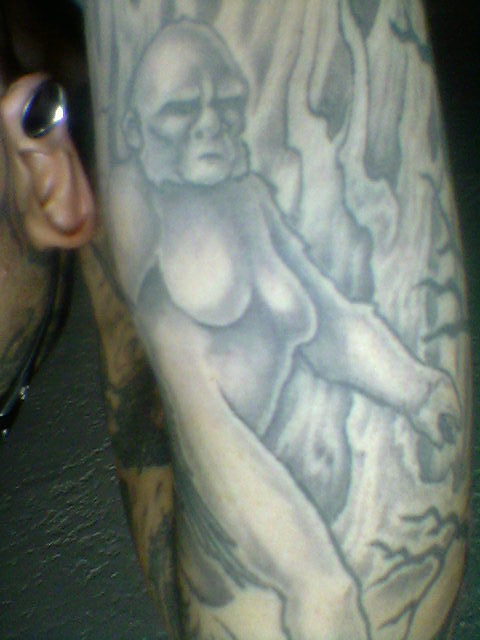

If tattoos are anything to go by, a generation seems to have fallen through. Atleast a study seem to suggest so. Psychiatrists at the Michigan Centre for Forensic Psychiatry linked tattoos with antisocial personality disorder, or ASPD. According to the study, ASPD sufferers prefer action to thought and pathological lying, cheating, stealing, physical aggression and drug abuse are not uncommon. “I don’t want to generalise but I’m sure there’s a certain section of people that the study can relate to. A lot of people who get tattoos have had to go through a lot in their lives. Some people thrive on the pain of getting tattoos because the pain they suffer in their lives is nothing compared to the needle. It makes them feel alive,” says tattoo artist Al. His clientele includes a woman who finds getting inked orgasmic and another one who, on dreaming about a man who wanted to kill her, got herself a tattoo of that man with consultation from a book on dreams which relayed that getting the tattoo was the only way she could rid herself of the man. If these fall under APSD, would tattoos loom large at creating havoc on societal ‘norms’ rather than being just a fad?
“If a person has a history of APSD, tattoos don’t necessarily have to do with any of the behavioral tendencies. It may or may not co-relate. The association is not strong enough,” says Dr Hozefa Bhinderwala, consultant psychiatrist at Saifee Hospital and Prince Ali Khan Hospital.
The study also uncovered an increased likelihood for those with tattoos to have previously suffered from sexual abuse, abused substances or to have attempted suicide. “That’s just bull s**t. People get tattoos for different reasons. Some get it done for personal reasons, some just enjoy the pain while its art for a lot of people. I have a lot of tattoos and I’m planning to get some more. Do I suffer from some anti social disorder? I don’t think so,” says rapper Hard Kaur.And of course what’s a study without the numbers. People with ASPD significantly had higher numbers of tattoos, a larger percentage of their body covered with tattoos, and tended to have tattoos in more visible locations, the study says. While Al may have tattooed people in the strangest parts of the body veering him to comment that the eyes are practically the only place people don’t have tattoos, Dr Bhinderwala looks at it with a bioscopic view saying, “ The study probably dealt with people with criminal records. For them it’s about boldly showing who they are. It’s a sign of being macho. But the youth of today probably just get tattoos more as a fashion statement to grab attention.” Numbers or not, Amy Winehouse could have made a good subject.
“If a person has a history of APSD, tattoos don’t necessarily have to do with any of the behavioral tendencies. It may or may not co-relate. The association is not strong enough,” says Dr Hozefa Bhinderwala, consultant psychiatrist at Saifee Hospital and Prince Ali Khan Hospital.
The study also uncovered an increased likelihood for those with tattoos to have previously suffered from sexual abuse, abused substances or to have attempted suicide. “That’s just bull s**t. People get tattoos for different reasons. Some get it done for personal reasons, some just enjoy the pain while its art for a lot of people. I have a lot of tattoos and I’m planning to get some more. Do I suffer from some anti social disorder? I don’t think so,” says rapper Hard Kaur.And of course what’s a study without the numbers. People with ASPD significantly had higher numbers of tattoos, a larger percentage of their body covered with tattoos, and tended to have tattoos in more visible locations, the study says. While Al may have tattooed people in the strangest parts of the body veering him to comment that the eyes are practically the only place people don’t have tattoos, Dr Bhinderwala looks at it with a bioscopic view saying, “ The study probably dealt with people with criminal records. For them it’s about boldly showing who they are. It’s a sign of being macho. But the youth of today probably just get tattoos more as a fashion statement to grab attention.” Numbers or not, Amy Winehouse could have made a good subject.
Change is constant but split remains...

“I’m getting a haircut,” says guitarist Melroy D’mello on their session play at Bootleggers on Thursday. Seven years on, Split still roll on the gig lists. After a round of what they call “the usual rock n roll roulette” of line-up changes, broken strings and “sociopath-percussionists”, the band are still sticking around with their “old-timers” like Stone Temple Pilots, Audioslave, Pearl Jam, System Of a Down and U2. Of course the round of completion on that list doesn’t happen without the originals for any band.
“Our sound is pretty much the same. We did attempt to get a little more experimental, playing a note differently here and there but we’ve retained what we play,” says D’mello.
With Garreth D’Mello on the vocals, Aviv Pereira , Melroy D’Mello and Shekhar Mohite on the guitars and Nigel Collasco on the Drums, the band could just be on the same high as the first time they took the stage. Or maybe not. “Anything can happen at live gigs. It’s always a different feeling when you have the crowd so close listening to you. It’s always personal,” says a somewhat weary D’mello.
The band has been working on their debut album P is for Pig for a while now. While they aren’t trying to teach anyone how to spell, they’ve signed themselves on with Counter Culture Records. “ While the live gigs scene is thriving again, we’ve stopped looking for opportunities. We’re not a band that’s into marketing ourselves that much. If it happens, it happens,” he says.
Expect the unexpected? Mostly the bands “mosh-friendly” and “heavier-that-pockets” sounds of My House, Fat oaf and Pig Society.
Their song Holy Ghost Machine Gun off the album takes a shot at godmen and their strangely conflicting faith in violence while Build (Higher), according to them, seem like the portrait of today’s youth — “battered by self doubt and anger-fueled by policemen who rape and politicians who kill”. D’mello says that while their earlier works might have been politically-charged, right now their songs are primarily just “charged”. “It’s just another aspect of what we do with our music,” he adds.
“We’re at a place where we’ve finally settled down. It’s like a structure — from setting up the foundation to finally becoming the visage of what it ought to look like. There has been a lot of improvement over the years. We could be doing four gigs in two months of nothing at all in six. Of course we’d like to sell a million records but it’s all about priority. People change, priorities change, even music changes,” says D’mello. Pretentious they’re not. And to hell with being politically correct. Bring on the music.
“Our sound is pretty much the same. We did attempt to get a little more experimental, playing a note differently here and there but we’ve retained what we play,” says D’mello.
With Garreth D’Mello on the vocals, Aviv Pereira , Melroy D’Mello and Shekhar Mohite on the guitars and Nigel Collasco on the Drums, the band could just be on the same high as the first time they took the stage. Or maybe not. “Anything can happen at live gigs. It’s always a different feeling when you have the crowd so close listening to you. It’s always personal,” says a somewhat weary D’mello.
The band has been working on their debut album P is for Pig for a while now. While they aren’t trying to teach anyone how to spell, they’ve signed themselves on with Counter Culture Records. “ While the live gigs scene is thriving again, we’ve stopped looking for opportunities. We’re not a band that’s into marketing ourselves that much. If it happens, it happens,” he says.
Expect the unexpected? Mostly the bands “mosh-friendly” and “heavier-that-pockets” sounds of My House, Fat oaf and Pig Society.
Their song Holy Ghost Machine Gun off the album takes a shot at godmen and their strangely conflicting faith in violence while Build (Higher), according to them, seem like the portrait of today’s youth — “battered by self doubt and anger-fueled by policemen who rape and politicians who kill”. D’mello says that while their earlier works might have been politically-charged, right now their songs are primarily just “charged”. “It’s just another aspect of what we do with our music,” he adds.
“We’re at a place where we’ve finally settled down. It’s like a structure — from setting up the foundation to finally becoming the visage of what it ought to look like. There has been a lot of improvement over the years. We could be doing four gigs in two months of nothing at all in six. Of course we’d like to sell a million records but it’s all about priority. People change, priorities change, even music changes,” says D’mello. Pretentious they’re not. And to hell with being politically correct. Bring on the music.
Shruti Hasaan


Originality is no longer treason in times of manufactured content. So to speak. But in a quest for identity, Shruti Haasan seems to be carving her very own niche of music that ranges through her vocals. With a fan following that has long left her chennai roots, her persona seem to allure an array of listeners that need not necessarily be rooting for her almost “punkish” appearance. Her music described in most gig listings as original alternative rock and soul, purist could cry hoarse at the usage of the terminology but she says, “Original is a term that’s easy as well as hard to describe. Easy in the sense of its generic description referring to an original idea or concept represented by an artist or a band. In a larger sense I find it hard to describe simply because as an artist or as a band we derive our influences from so many artists and genres. Every single chord has already been played. Most ideas and experiences have already been put to words. What is important though is the way it comes naturally to me representing my thought process or emotions, originally.”
Having done the live gig circuit across the country, she could be a favourable candidate to grace many a gig list that would be straight out of the glossies. So could The Extrementals then be left that far behind? “Each member in a band has a part to play. It’s always a common misunderstanding that the “frontman” or “woman” has the ability to over power other musicians or steal a show. At the end of the day a band is a team and any team falls apart when one of its members feel they are above the situation or don't respect the idea as a whole. Besides the beauty of music is that it always humbles people. It becomes much greater than the people who act merely as its vessels,” she says about her bandmates.
Her influences could run through a long sheet but her performances ranges from singing Rama Rama for the film Hey Ram to belting out her version of Madonna’s beautiful stranger to Jamiroquai’s deeper underground. She however maintains that she’s still grounded to Indian classical music. “It’s due to the fact that I began my training as a singer in Hindustani classical music. I don't feel a pressure or need to incorporate it in every song though. If it happens it occurs with ease. I try not to slot myself into genres or try and contrive a way to stay true to a genre. Sometimes the music just happens to go to that “Indian” vibe because of the scale or because of the concept,” she asserts.While noting the futility of convincing people of her opinion, music or otherwise, she says,” What’s important is that music stays music for those who create it and those who listen to it.” No subtexts or downright pre-conceived notions. Amen.
Having done the live gig circuit across the country, she could be a favourable candidate to grace many a gig list that would be straight out of the glossies. So could The Extrementals then be left that far behind? “Each member in a band has a part to play. It’s always a common misunderstanding that the “frontman” or “woman” has the ability to over power other musicians or steal a show. At the end of the day a band is a team and any team falls apart when one of its members feel they are above the situation or don't respect the idea as a whole. Besides the beauty of music is that it always humbles people. It becomes much greater than the people who act merely as its vessels,” she says about her bandmates.
Her influences could run through a long sheet but her performances ranges from singing Rama Rama for the film Hey Ram to belting out her version of Madonna’s beautiful stranger to Jamiroquai’s deeper underground. She however maintains that she’s still grounded to Indian classical music. “It’s due to the fact that I began my training as a singer in Hindustani classical music. I don't feel a pressure or need to incorporate it in every song though. If it happens it occurs with ease. I try not to slot myself into genres or try and contrive a way to stay true to a genre. Sometimes the music just happens to go to that “Indian” vibe because of the scale or because of the concept,” she asserts.While noting the futility of convincing people of her opinion, music or otherwise, she says,” What’s important is that music stays music for those who create it and those who listen to it.” No subtexts or downright pre-conceived notions. Amen.
Subscribe to:
Comments (Atom)


 Posts
Posts


